

EXPECT-AGRI: The Political Economy of Expectations in Agri-Food Sustainability Transformations
Content and Objectives of the Research Project
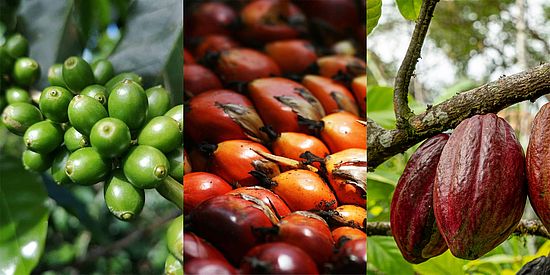
The production of agricultural commodities such as coffee, cocoa, and palm oil is associated with persistent environmental and social problems, including deforestation, forced and child labor, and smallholder poverty. Transforming agri-food systems is therefore a major sustainable development challenge. European governments are currently seeking to advance this transformation through mandatory supply chain sustainability legislation, including due diligence regulations and import restrictions.
This project uses this example of transformational public policy implementation to investigate how regulators can successfully foster sustainability transformations. It focuses on how expectations about the future – particularly regarding regulatory compliance, the stringency of rules, and their enforcement – are negotiated between regulators and economic actors, and how these expectations shape present-day decisions about preparatory actions. In other words, the project examines the political economy of expectations.
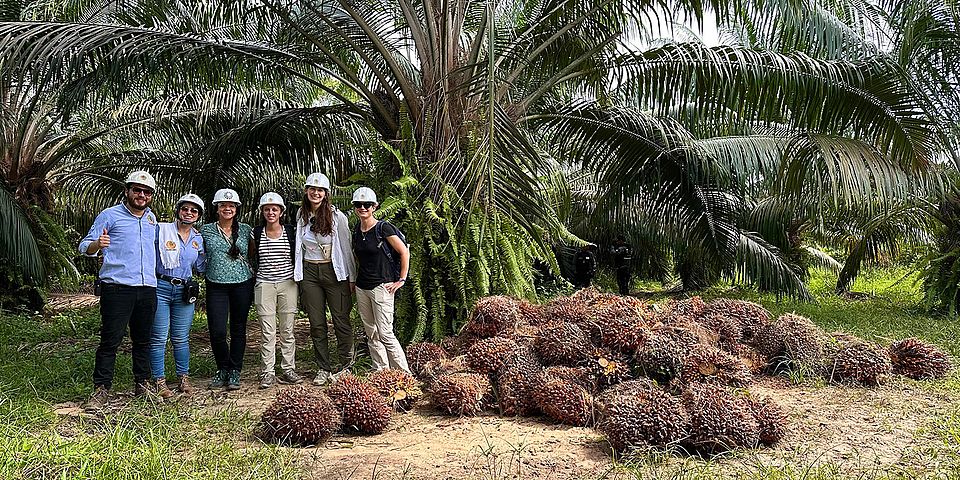
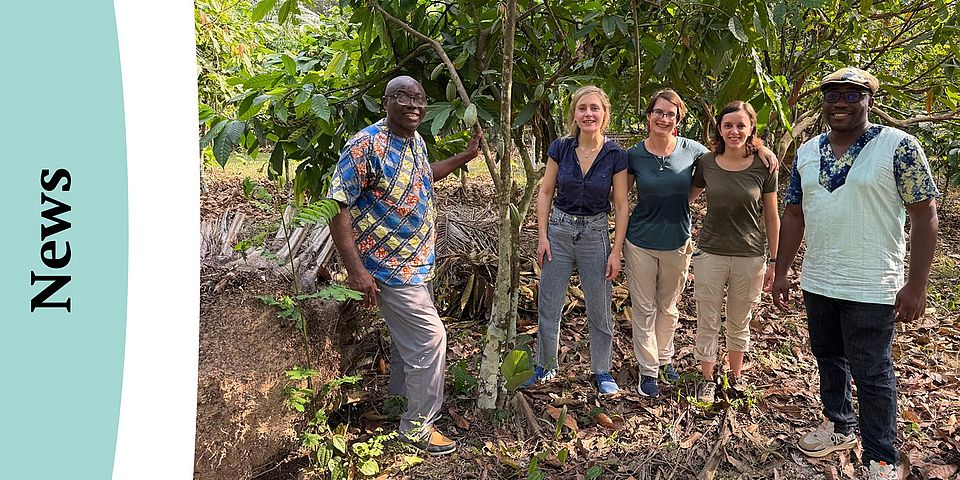
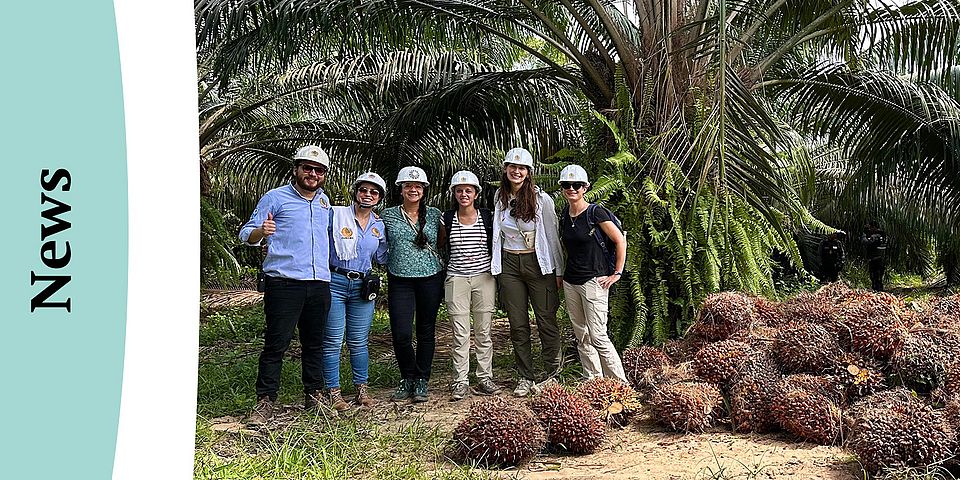
The project adopts a triple comparative perspective. It compares policy implementation across three sectors (coffee, cocoa, palm oil), three issue areas (deforestation, forced and child labor, and living incomes), and two producing countries (Colombia and Côte d’Ivoire). Multiple methods are used, including Q-methodology, survey research with a conjoint experiment, process tracing, discourse analysis, and computational text-as-data analysis.
EXPECT-AGRI is structured into five work packages.
- WP1 maps the expectations of different stakeholders.
- WP2 examines how legislative compliance is negotiated and defined.
- WP3 analyzes implementation at the company and sector level and how expectations about other actors’ behavior shape firms’ decisions.
- WP4 assesses country-level implementation in Colombia and Côte d’Ivoire along global value chains.
- WP5 studies how compliance with supply chain sustainability legislation is reported and enforced, and how enforcement relates to companies’ expectations and implementation actions.
The project aims to advance theory on the political economy of expectations in implementing transformational public policies while generating new empirical insights into the effectiveness of supply chain sustainability legislation in agri-food value chains. The findings will support both academic research and policy making by helping policy makers design sustainability policies that anticipate corporate behavior and thereby improve policy effectiveness.
Scientific and Societal Context
Our global food system urgently needs to become more socially equitable and environmentally sustainable. However, it remains highly challenging to move beyond niche-level innovations and achieve genuine systemic change.
The new, far-reaching supply chain laws have the potential to generate such transformation. Our research will assess whether and why this has (or has not) occurred and develop policy recommendations to improve future outcomes.
![[Translate to English:] Substack](https://nachhaltigkeit.philhist.unibas.ch/fileadmin/_processed_/7/7/csm_Substack_EXPECT-AGRI_320de32a6b.jpg)
![[Translate to English:] SNF](https://nachhaltigkeit.philhist.unibas.ch/fileadmin/_processed_/9/6/csm_SNF_Logo_b3d416ade1.jpg)
EXPECT-AGRI Research Group
Research Collaborator
![[Translate to English:] d](https://nachhaltigkeit.philhist.unibas.ch/fileadmin/_processed_/1/b/csm_Sophia_Carodenuto3_c688efb7ff.jpg)
Quick Links