

/ News, Forschung
New publication on zero-deforestation commitments and palm oil smallholders
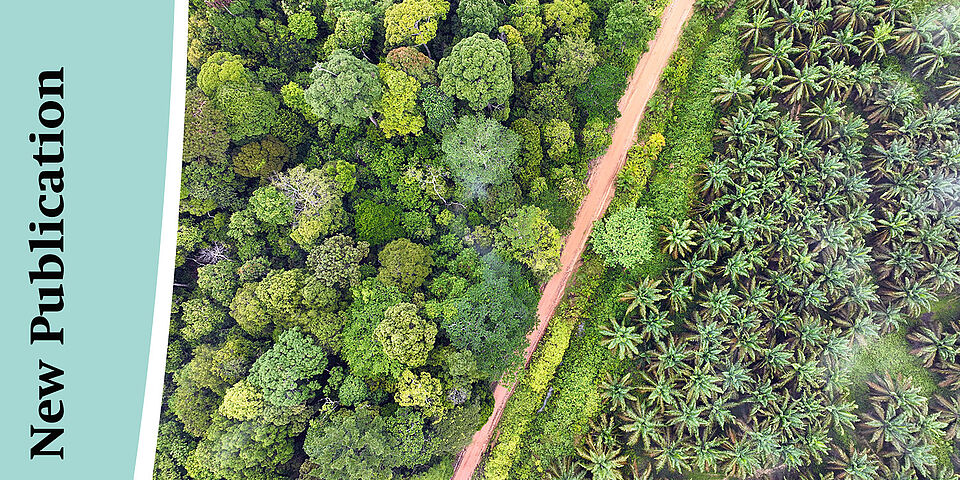
A new Nature Sustainability study co-authored by Janina Grabs examines how corporate zero-deforestation commitments reach smallholder farmers in Indonesia.
A new study published in Nature Sustainability examines the implementation of corporate zero-deforestation commitments (ZDCs) in Indonesia’s palm oil sector and their implications for smallholder farmers.
Co-authored by Janina Grabs, Head of the Sustainability Research Group at the University of Basel, the study draws on surveys with 1,541 non-industrial oil palm farming households and 53 interviews with supply chain actors in Sumatra. The researchers investigate whether and how zero-deforestation commitments reach smallholders, including their effects on market access, prices, training and village-level deforestation.
The results reveal substantial implementation gaps. Access to zero-deforestation markets depends strongly on whether farmers are located within company sourcing areas, while awareness of relevant requirements remains low. Independent smallholders in particular receive little information or targeted support, and the researchers find almost no zero-deforestation-focused capacity building or price incentives. At the same time, active exclusion of smallholders from these supply chains appears to be limited.
The study therefore points to both effectiveness and equity challenges in current approaches. The authors argue that improving zero-deforestation policies will require stronger communication, traceability and capacity building at the local level, particularly for independent smallholders.
Publication:
Chandra, A., Grabs, J., Meemken, E.-M., Hidayat, N. K., Dharmawan, A. H., Mardiyaningsih, D. I. & Garrett, R. D. (2026). Limited reach of zero-deforestation commitments to Indonesian oil palm smallholders. Nature Sustainability, 9, 1338–1351.
Quick Links